Internal structure for increasing the rated voltage

2024-01-05

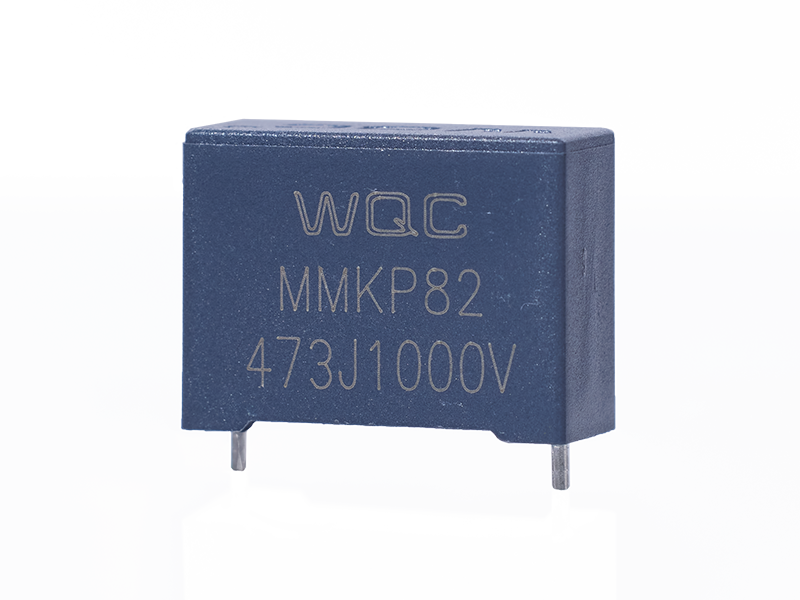
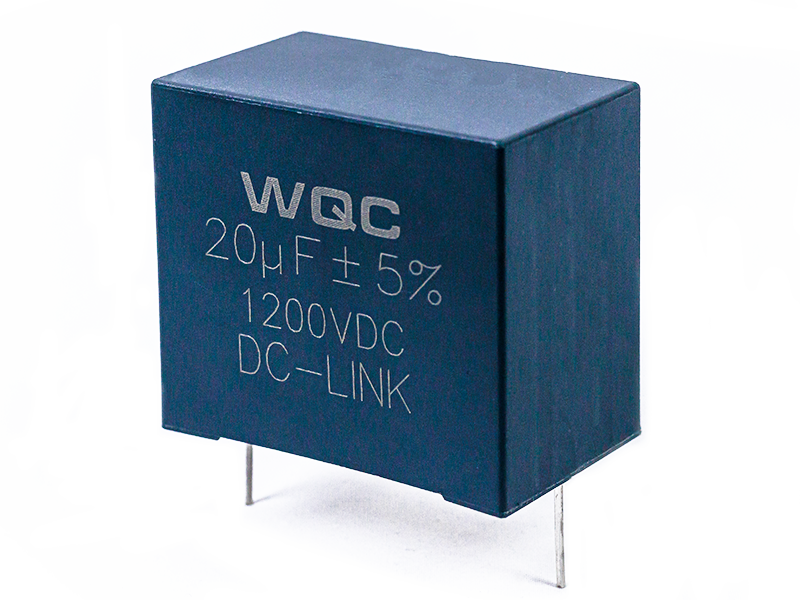
The rated voltage of different film materials depends on factors such as film thickness, material quality (free from physical defects and chemical impurities), ambient temperature, operating frequency, and the safety margin against breakdown voltage (dielectric strength). However, broadly speaking, the rated voltage of film capacitors primarily depends on the thickness of the plastic film. For example, using the minimum available film thickness for polyester film capacitors—approximately 0.7 μm—it is possible to manufacture capacitors with a rated voltage of 400 VDC. If higher voltages are required, thicker plastic films are typically employed.

Learn more

Self-healing of metallized film capacitors

2024-01-05

Metallized film capacitors possess self-healing properties, a feature that film/foil configurations lack. When a sufficiently high voltage is applied, point defects causing short circuits between the metallized electrodes will vaporize due to the high temperature of the electric arc. This is because both the dielectric plastic material at the breakdown point and the metallized electrodes surrounding the breakdown point are extremely thin—approximately 0.02 to 0.05 micrometers. The point defect responsible for the short circuit is burned away, and the resulting vapor pressure also blows the arc away. This process can be completed in less than 10 microseconds.

Learn more

A Brief Analysis of Fault Handling Methods for Capacitors

2024-01-05

When the fuse of a capacitor blows, you should report to the dispatch center and only open the capacitor’s circuit breaker after obtaining their approval. Before proceeding, disconnect the power supply and discharge the capacitor. First, perform an external inspection: check whether there are any flashover marks on the bushings, whether the enclosure is deformed, whether there is oil leakage, and whether the grounding device shows any signs of short circuits. Next, measure the insulation resistance between the terminals and between each terminal and ground. Finally, verify that the capacitor bank wiring is complete and secure, and check for any phase failures.

Learn more

Method for Testing Fixed Capacitors

2024-01-05

1. Testing small capacitors below 10 pF: Since fixed capacitors below 10 pF have extremely low capacitance, using a multimeter to measure them can only provide a qualitative assessment of whether they exhibit leakage, internal short circuits, or breakdown. When performing the measurement, select the multimeter’s R×10k range and connect the two test leads to any two pins of the capacitor; the resistance reading should be infinite. If the measured resistance (indicated by the needle moving to the right) is zero, it means the capacitor is damaged due to leakage or has suffered an internal breakdown.

Learn more

Supercapacitors are also known as electric double-layer capacitors.

2024-01-05

Supercapacitors, also known as electric double-layer capacitors or electrochemical capacitors, are a new type of electrochemical energy-storage device whose electrochemical performance lies between that of conventional capacitors and batteries. They mainly consist of four key components: electrodes, electrolyte, current collectors, and separators. Energy storage in supercapacitors primarily occurs through two mechanisms: the electric double-layer capacitance and the Faradaic pseudocapacitance arising from redox reactions. Generally speaking, the energy-storage process in supercapacitors is reversible, making them well-suited to address issues such as battery memory effects. Currently, supercapacitors find applications across a remarkably wide range of fields.

Learn more

Properties of Film Materials Used in Thin-Film Capacitors

2024-01-05

The electrical characteristics, temperature behavior, and frequency response of film capacitors largely depend on the type of material used to form the capacitor’s dielectric. The following table lists the most important properties of the primary plastic film materials currently in use. Properties of composite film materials are not included in this table. The data presented in this table are drawn from specifications published by various manufacturers of film capacitors for a wide range of industrial electronic applications. The wide range of dissipation factor values encompasses both typical and maximum specifications obtained from data sheets provided by different manufacturers. This table does not include typical electrical values for power supply capacitors or large AC capacitors.

Learn more

< 12 > 跳转到